
Thuthukani Special School in Empangeni is a school for learners with severe to profound intellectual disability aged 6 to 19 years. The school was founded in February 1981. The school has grown significantly over the years and currently we are educating as many learners as we can physically cater for. Our current enrolment is 439 learners, and we have a steadily growing waiting list. After placing as many learners as possible, in March 2026, our waiting list had over 350 learners that have been assessed and found to need the high levels of support offered by our school. 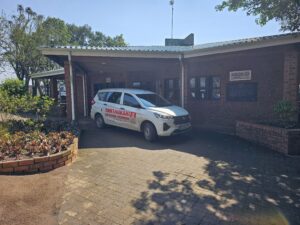
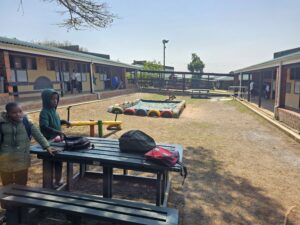
We are based on Dover Sugarcane Farm just outside of Empangeni and we accept learners from Empangeni, Richards Bay, eNseleni, Kwa-Mbonambi, eSikhaweni, Ngwelezana, and other rural areas.
The learners are all severely to profoundly intellectually disabled, come from multicultural, multi-language backgrounds and often have more than one disability. More than 97% of the learners at Thuthukani are Black South African Citizens. The main aims of the school program are to build our learners’ self-esteem and functional ability to ensure that they leave the school as independent as possible, equipped with skills they can use to contribute to their communities.
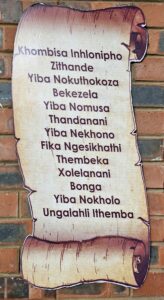
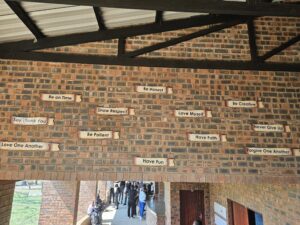
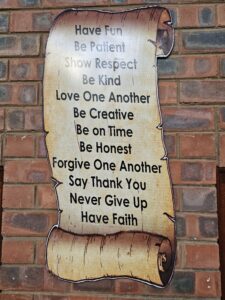
Thuthukani is a value driven school. Our parents and staff collectively have identified core values that we all aspire to. These values form the background to our teaching and learning. Every adult and child in the school know, understand and live the values of:
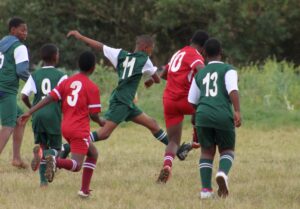
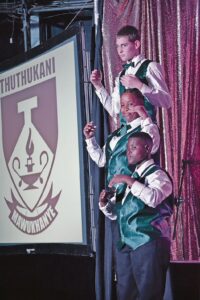
Thuthukani Special School has been identified as a Resource Centre by the National and Provincial Department of Education to pilot the National Educational Policy on Inclusion. Our work has been recognised internationally – We had representation at the World Down Syndrome Congress and we have had visits from schools and universities from all over the world, like Michigan, UK, Hong Kong, Brazil, Norway, New Zealand, Vietnam – to mention a few. The program that we follow at Thuthukani has received National acclaim – our school leaver and school-to-work link programmes and other teaching philosophies were included in the newly developed National Curriculum for children with Severe Intellectual Disability (CAPS: SID), specifically the subjects Life Skills and Physical Education. Our staff members trained educators and senior officials on this curriculum nationally and locally in the above subjects as well as Languages and Mathematics. Our learners compete in sport, and we have had a member of staff and a learner represent South Africa in two consecutive Special Olympics World Games. Once for table tennis and once for swimming. Our swimmer received a gold medal. Our choir participated in the 2023 SASCE and we took second place in our District and in 2024 we took first place in our district, and we achieved second position nationally. The Department of Health declared Thuthukani a Health Promoting School – the first special school in KZN to achieve this, and we had a final score of 98.6%

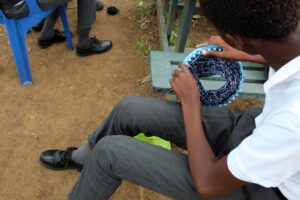
We have many community outreach programs, and we have solid relationships with local traditional leaders and businesses. Surrounding schools, organisations and municipalities contact us for assistance and guidance in improving the support and education of people with intellectual and physical disabilities as well as their families.
Thuthukani focuses on holistic education. We are currently in the process of implementing CAPS: SID at our school. We also have additional programmes to equip learners with life skills and functional academic skills. Over and above the class program the learners get the opportunity to participate in sport, dancing, cultural activities, choir, physical education, occupational therapy, physical therapy, alternative communication training, sign language training, Play-to-Learn, and more. This ensures their social, emotional, motor, and cognitive development at all levels. We also offer a Skills Development program for the stronger school leavers where they learn good work habits as well as the skill of cleaning, gardening or sewing. The Department of Social Development supports an adult sheltered workshop on the premises. This workshop offers employment opportunities for our learners once they leave school as well as for other disabled members of the community.
Many of our learners come from very poor families and arrive at school hungry. We do receive support from the National Nutrition Programme, but unfortunately, as the food items provided are inadequate, we need to allocate funds to support this scheme at our school. This scheme also only provides for one meal per day, so we need to raise funds to provide our learners with breakfast to support their nutritional needs and ability to learn. Thuthukani further provides specially adapted learning and teaching support material and stationery to the learners.
To ensure that our learners are included and not segregated from their non-disabled peers, we have an active sport and cultural program where our learners can compete against both disabled and non-disabled learners. We do not provide a boarding facility at our school. This allows our learners to have similar “out of school” experiences as their peers and assists with better community inclusion. All our learners are assisted with taking public transport to and from school daily.
Thuthukani receives a subsidy from the SA Government, but this amount is not sufficient to run the school effectively and safely.
Thuthukani deliberately keeps school fees very low, to enable the parents of learners who can pay school fees to meet this requirement. Despite this deliberate action, only about 26% of our learners could pay school fees in 2025 due to their socio-economic circumstances. The School Governing Body annually writes off all unpaid school fees.
We rely heavily on fundraising to effectively operate the school. Our budget, that is set to meet the learner’s basic educational needs, must be calculated with an expected shortfall, and we must limit all extra requirements such as capital expenditure, new projects, SGB staff appointments, etc. In fact, our SGB Treasurer calculated that we must raise at least R 3000.00 per learner to cover their educational needs for 2026.